OLD NEWS…
We put a new roof on the barn in 2021!
With the help of a 50% grant from DAHP (Washington State Department of Archaeology & Historic Preservation) we replaced our old cedar shake roof with a steel roof. Although it’s normal to repair a historic barn with an exact restoration using the same materials as the original structure, concerns for fire safety and longevity allowed for the use of corrugated galvanized steel panels, the same size and type of panels that would have been available in 1911, when the barn was built.
The project had four phases:
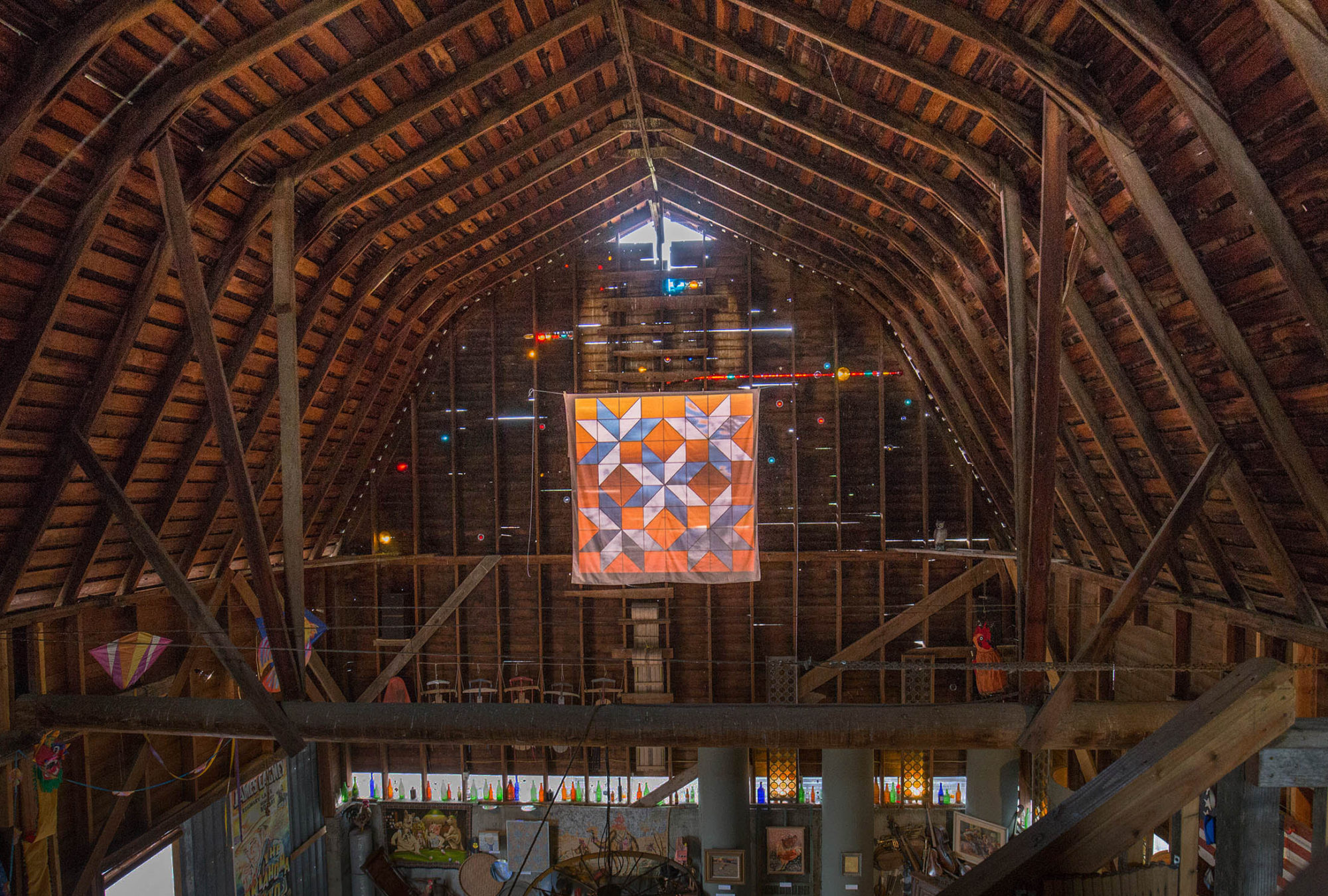
Phase 1. Preparing for the “rain of filth” that would occur in the barn when the old cedar shakes are removed. The original skip-lap sheathing below the shakes has wide gaps between the boards (essential to allow cedar shakes to breathe), and when the old shakes are ripped from the roof a shower of dirt, wood chips, and even Mt. St. Helens ash from 1980 would fall into the barn. Everything would need to be gathered and protected under plastic sheeting before the old roof could be removed. We did this work ourselves
Phase 2. Removal of the old roof by Columbia Plateau Roofing.
Phase 3. Installation of the new roof by Columbia Plateau Roofing.
Phase 4. Cleaning the mess inside the barn, removing the plastic sheeting, and putting everything back together again. We did this ourselves.
Our 2019 grant proposal to DAHP was approved and awarded in January 2020, and the project was scheduled to begin in spring of that same year. We had plenty of work to do before the messy removal of the old roof, and we began Phase 1 almost immediately. But Covid regulations regarding worker safety significantly slowed the project, and the crew could not begin until December. The new roof was on by mid-January 2021, and the project was completed before spring.
Here’s the project in pictures:


…and an excuse to re-install almost everything inside!
One complication and eventual bonus of the project was that we were forced to improve the barn’s plumbing system. We had planned for the roof project in the summer, when the barn’s plumbing system is working (the system was annually drained and turned off for winter to avoid freezing pipes).
But Covid regulations required a working bathroom with sink for the work crew, separate from our home system, and the crew would be working in December and January. To meet this requirement we insulated the barn bathroom (floor, walls, and ceiling to approximately R-80!) so that the room would be heated by the water heater; we wrapped and heated the water service line to the bathroom; and we created a custom “manifold” in the bathroom that allows us to turn off and drain the water lines to the kitchen, shop sink, and outdoor spigots in the winter while leaving the water functioning in the bathroom. In addition, creative insulation and “space-sharing” allows us to leave the kitchen sink functioning throughout the winter, except during extreme cold spells, when we can easily turn off those lines.
This has made a huge difference in how we use the barn during the cold months!


___________________
REALLY OLD NEWS…
April 2020
We will be putting a new roof on the barn in the summer of 2020.
We were lucky enough to receive a grant from WA-DAHP, the Washington State Heritage Barn program, through the Department of Archaeology & Historic Preservation.
The grant application process was tough, but years of museum work paid off, and we wrote a good one.
The new roof will be corrugated galvanized sheeting, different from the original cedar shakes, but authentic to 1911 construction and preferable for fire safety and longevity.
We will update s as the project moves forward.
April 2020
We got 16 new Barred Rock chicks!
Hopefully they are all hens, but only time will tell.